Target Audience:
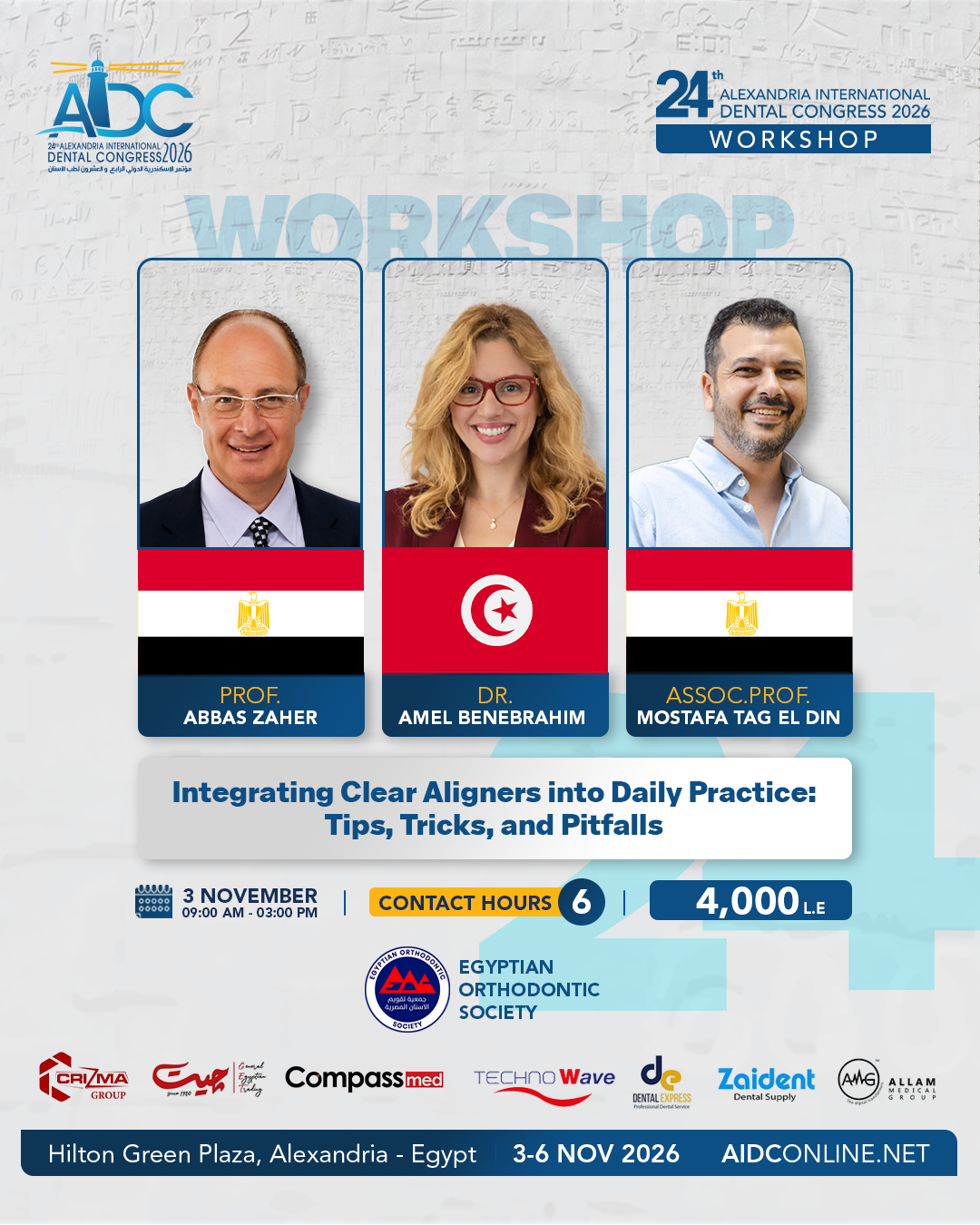
Orthodontists aiming to incorporate clear aligner therapy into daily practice, as well as postgraduate students.
Course Schedule
Session 1: Foundations and Patient Selection
This session focuses on the scientific and diagnostic foundations of aligner orthodontics to ensure proper case selection from day one.
- How aligner forces differ from fixed appliances.
- Indications and contraindications for beginners.
- Assessing mild-to-moderate crowding and spacing.
- Understanding tracking and predictable vs. unpredictable tooth movement.
Session 2: Diagnostics and Digital Workflow
- Taking highly accurate clinical records.
- Intraoral scanning protocols: avoiding common errors during scans.
- Submitting the case properly to the laboratory or software portal.
Session 3: Clinical Protocols
This session shifts to clinical execution, focusing on the mechanics needed to achieve predictable results and reviewing engaging case studies.
- Attachments: When, where, and why to place them.
- Interproximal Reduction (IPR): Techniques, instruments, and safety protocols for gaining space.
- Using elastics and buttons with aligners.
- Using auxillary appliances with aligners.
Session 4: Troubleshooting and Common Pitfalls
- What to do when the aligner stops tracking.
- Addressing patient compliance and oral hygiene.
- Handling mid-course corrections and refinements.
Session 5: Clinical Cases
- Discussion of different clinical cases.
Session 6: Digital Treatment Planning
This hands-on, practical session equips attendees to navigate the planning software effectively and design their first setups.
- Introduction to the 3D planning software interface.
- Understanding the treatment setup.
- Manipulating the macro-staging and micro-staging.
- Step-by-step case planning from the initial model to the final setup.
- Managing overcorrection and modifying tooth movements.
- Live demonstration of a full case setup using a real patient dataset.
Session 7: Open Q/A panel with all three instructors to address specific clinical challenges.
