
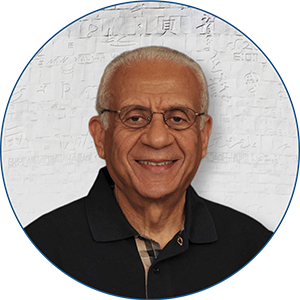
Dr. Omar Abdel al Zidan is a distinguished academic and clinician serving as an Associate Professor in the Division of Operative Dentistry, Department of Restorative Sciences at the University of Minnesota’s School of Dentistry. His professional profile is characterized by a uniquely international educational background, a prolific and impactful research career centered on dental biomaterials, and a deep commitment to undergraduate education. Dr. Zidan’s scholarly work has significantly advanced the understanding of resin bonding and other restorative techniques, while his role as an educator is defined by an innovative focus on integrating evidence-based dentistry and modern digital technologies, such as CAD/CAM, into the dental curriculum. His career demonstrates a rare and effective blend of theoretical expertise, a legacy of foundational research, and practical clinical application.
Dr. Omar Abdel al Zidan’s academic journey is notable for its global scope, providing a broad foundation that distinguishes his expertise. He was born in Cairo, Egypt, where he completed his undergraduate studies, earning a PNS (Sciences) from Cairo University College of Science in 1968 and a Bachelor of Dental Surgery (BDS) from Cairo University Faculty of Dentistry in 1972.1 His postgraduate education further diversified his experience, taking him to Europe and the United States. He was awarded a PhD in Restorative Dentistry from Al Azhar University in 1979, with his doctoral research on “Studies on the bonding of restorative resins to dental hard tissues” being completed at The Royal Dental College in Copenhagen. This early international collaboration in his doctoral work is indicative of a career-long engagement with a global scientific community. He then pursued further specialization in the United States, obtaining a Master of Science (MS) in Dentistry and a General Practice Residency (GPR) from the University of Minnesota School of Dentistry, both in 1984.
The extensive international nature of his training, spanning institutions in Egypt, Denmark, and the United States, has likely exposed him to diverse clinical philosophies, research methodologies, and technological advancements, equipping him with a comprehensive perspective on the field. This rich academic background is reflected in his professional capabilities, as he is fluent in Arabic, English, and French and possesses a good command of Danish. This multilingualism is a natural extension of his cross-continental educational path, solidifying his profile as a globally minded academic. The progression from foundational studies in material science to clinical residencies and advanced degrees demonstrates a deliberate and continuous pursuit of knowledge.
Following his postgraduate training, Dr. Zidan established a long-standing and distinguished career at the University of Minnesota. He currently holds the title of Associate Professor within the School of Dentistry, serving in the Division of Operative Dentistry and the Department of Restorative Sciences.1 His tenure at the institution is marked by a dual professional identity. He is not only an academic researcher but also an active clinician, listed as a faculty “General Dentist” provider at the university’s dental clinics. This combination of roles as a scholar and a hands-on practitioner is central to his professional identity. It highlights a clinician-scientist model where theoretical research and practical patient care are mutually reinforcing. His clinical duties directly inform his research questions and teaching methodologies, ensuring that his academic contributions remain relevant and grounded in the realities of dental practice.
Dr. Zidan’s research career is focused on the fundamental and applied aspects of dental materials, with a consistent effort to improve clinical outcomes. His work has a significant and lasting impact on the field. The central focus of Dr. Zidan’s research is on “resin bonding and its clinical applications”. This core interest is further defined by a series of specialized keywords associated with his work, which include
Bonding Agent, Dentinal, Enamel, Dentin, Bond Strength Engineering, Composite Resin, and Marginal Gap Formation. This body of work addresses a critical challenge in restorative dentistry: the creation of durable, long-lasting restorations by ensuring a strong and stable bond between the restorative material and the natural tooth structure. His research investigates the physical and chemical properties of these materials and the factors that influence their performance.
Over the course of his career, his research interests have evolved to incorporate modern advancements and emerging topics. In addition to his foundational work on bonding, he has also explored Cad Cam restorations, the application of digital technology in undergraduate education, and natural products to prevent dental caries. This progression demonstrates a scholar who has maintained his foundational expertise while actively engaging with contemporary trends, including the use of innovative digital tools and the exploration of holistic health approaches. His research on natural products for caries prevention, specifically related to Streptococcus mutans, reflects a forward- thinking approach to preventative dentistry.
Dr. Zidan has authored or co-authored numerous publications, including his foundational PhD and MS dissertations, and a collection of peer-reviewed journal articles. The impact of his scholarly contributions can be quantitatively measured by the citation counts of his work. Several of his publications have garnered substantial recognition, suggesting a lasting influence on the field of dentistry. For example, his 2003 article on the retention of complete crowns has accumulated 112 Scopus citations, and his 2004 paper on natural products for dental caries prevention has 81 Scopus citations. Similarly, his 1992 research on the retentive strength of luting cements has 70 Scopus citations, and his 2015 article on the microshear bond strength of resin cements has 72 Scopus citations.
The high citation counts for publications from the 1990s and early 2000s indicate that his work has served as a foundational reference for other researchers and practitioners over many years. His continued publication of highly cited articles, as exemplified by the 2015 paper, demonstrates that his research has consistently maintained its relevance and significance throughout a career spanning several decades.
Dr. Zidan’s influence extends beyond his research to his role as a dedicated educator and clinical mentor. He is deeply involved in shaping the next generation of dental professionals.
A significant portion of Dr. Zidan’s professional activities is dedicated to undergraduate education. He directs a course that trains students on how to use “evidence-based dentistry and artificial intelligence to formulated clinical decisions” in restorative dentistry. This is a crucial pedagogical approach that teaches students to systematically evaluate scientific literature to inform their clinical choices, thereby instilling a scientific and ethical foundation for their future practice. In a parallel effort to advance the curriculum, he also directs a course that provides hands-on training for undergraduates in fabricating CadCam Cerec restorations.1 This forward-thinking instruction on digital dentistry, which includes teaching D4 students same-day crown fabrication, positions the University of Minnesota as a leader in preparing students for the technological realities of a modern dental practice.
As a clinician-scientist, Dr. Zidan’s clinical teaching activities are directly connected to his scholarly expertise. He focuses on “assisting undergraduate students with esthetic cases”. This hands-on mentorship bridges the gap between the theoretical principles of material science and their practical application in a clinical setting. By guiding students through complex esthetic cases, he ensures that the knowledge he imparts from his research on bonding and restorative materials is translated into real-world skills. This mentorship is fundamental to his contribution, as it trains future dentists to produce functional, durable, and aesthetically pleasing outcomes for their patients.
Dr. Omar Abdel al Zidan’s career at the University of Minnesota is a testament to the powerful synergy between academic research, innovative education, and dedicated clinical practice. His diverse international background laid the groundwork for a distinguished
career defined by foundational contributions to the science of dental materials, particularly in the area of resin bonding. The
significant and lasting impact of his work is evidenced by the high citation counts of his publications, which have shaped scholarly discourse for decades. Simultaneously, he has established himself as a forward-thinking educator, modernizing the dental curriculum by integrating evidence-based methodologies and cutting-edge digital technologies. His role as a clinical mentor, guiding students in the art and science of esthetic dentistry, completes his profile as a clinician-scientist who has consistently advanced the field of operative dentistry through inquiry, innovation, and mentorship.
Dr. Omar Zidan is a distinguished practitioner and educator in restorative dentistry at the University of Minnesota, where he practices at the UM Physician Faculty Dental Practice. He is a recognized leader in the field of digital dentistry specializing in same-visit crowns and bridges using CAD/CAM technology. Dr. Zidan’s contributions to dental education and practice are pioneering. He was instrumental in introducing CAD/CAM technology to the University of Minnesota School of Dentistry Clinic as early as 2003, revolutionizing patient treatment by enabling the fabrication of high-quality restorations in a single appointment. His work has since focused on integrating cutting-edge technology and evidence-based practices into both clinical care and dental education.